PPI Side Effects and Dangers: What Your Doctor May Not Tell You
These medications were designed for 4 to 8 weeks of use — not the years many people end up taking them.

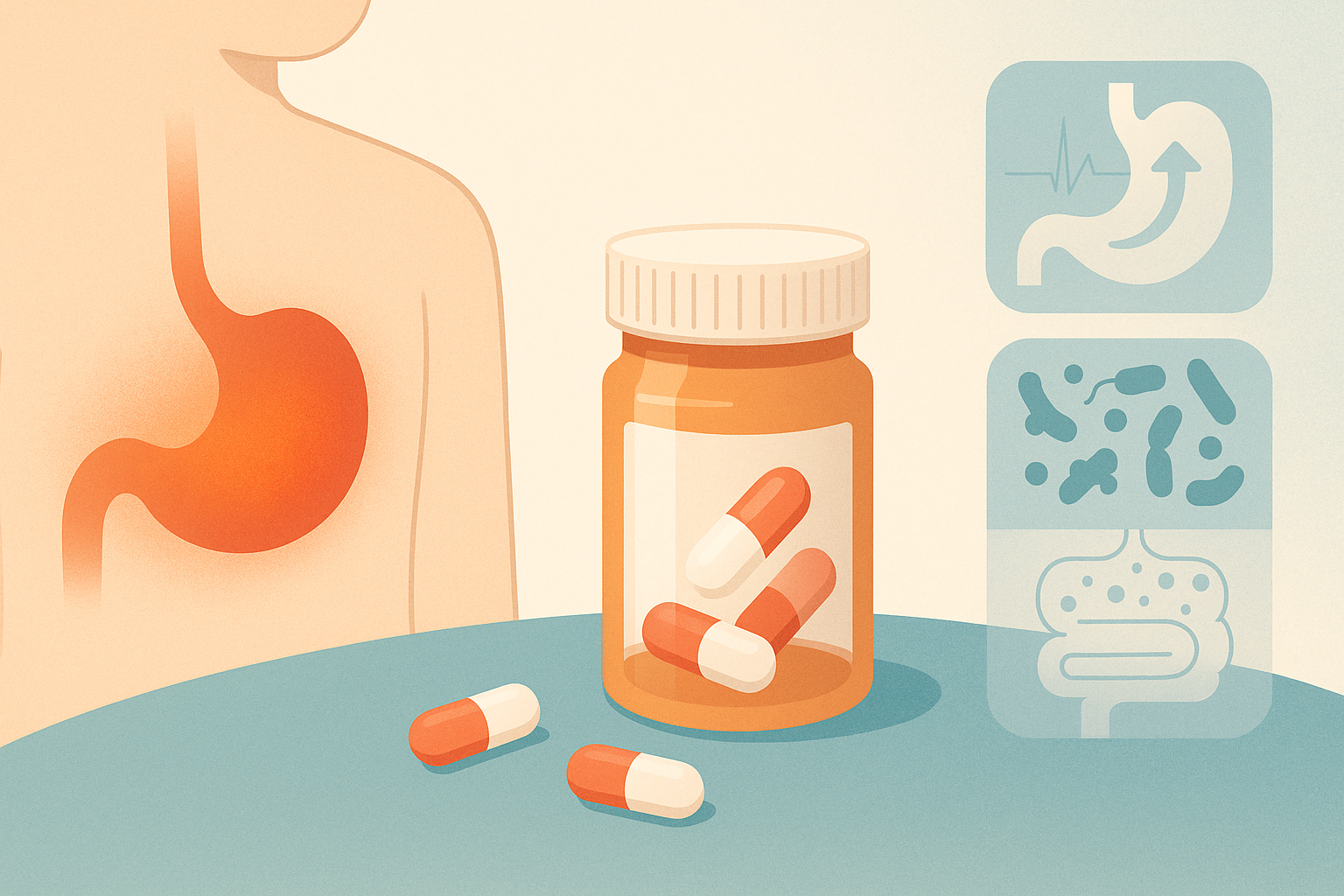
PPIs (proton pump inhibitors) reduce stomach acid, and short-term that can calm heartburn. The dangers come with long-term use: diminished digestion and nutrient absorption, headaches, nausea, diarrhea, constipation, abdominal pain, heart arrhythmias, softening of the bones and fractures, nerve and muscle symptoms, dementia, kidney disease, increased C. diff risk, gastric polyps, and SIBO. Guidelines have called for 4 to 8 weeks of use — not lifelong therapy.
Let's actually answer this question with some Q+A. Then we'll cover the question that usually comes next: how to get off them safely.
SIDE NOTE: Did you know that originally, doctors and guidelines recommended short-term use of Proton Pump Inhibitors (PPIs)—typically 4 to 8 weeks—for treating conditions like heartburn, aiming for symptom control followed by discontinuation. These drugs WERE NOT intended for long-term management in most patients, with FDA-approved, over-the-counter instructions often recommending just a 14-day course.
The side-effect list below is exactly why the length of use matters so much. A 14-day over-the-counter course and a 10-year daily prescription are not the same exposure. The longer stomach acid is suppressed, the more the downstream costs compound — digestion, nutrient status, bones, kidneys, and the bacterial balance in your gut.
PPI Questions, Answered
What are PPIs and what are they used for?
PPI stands for Proton Pump Inhibitor. The purpose of these medications is to reduce the release of stomach acids. And there are varying degrees of these medications - the stronger the medication, the more the stomach acids are decreased.
Are there different types of PPIs?
There are 2 different classes of medications that are lumped into PPIs: actual Proton Pump Inhibitors (known as Protonix or pantoprazole, omeprazole), and H2 Blockers (Pepcid AC, Zantac, Tagamet, to name a few).
Why are there different types of PPIs?
PPIs like omeprazole work to stop the enzyme system in the stomach from producing hydrochloric acid (HCl), thereby lowering your stomach acids. These are used in almost all heartburn cases when antacids are not helpful in resolving the issue. H2 blockers reduce stomach acid by reversibly binding to H2 receptors on gastric parietal cells, blocking histamine from triggering acid production. These are prescribed when PPIs don't fully do the trick. Some foods don't specifically trigger excess acid production but rather trigger histamine release in the stomach and as an indirect result, leads to excess acid production. This is when H2 blockers are prescribed.
What conditions are PPIs prescribed to treat, and why?
Heartburn, GERD (Gastro Esophageal Reflux Disease), EOE, peptic ulcers, Barrett's esophagitis, and NSAID-induced ulcers. The idea behind this type of treatment is that at the heart of the issues, it's excess stomach acids that are the culprit. The sooner you can lower the stomach acids, the sooner the problem improves.
Are there side-effects to taking PPIs?
Let's begin this answer reiterating the sentiment of the American College of Gastroenterologists in 2013 that said these medications should only be used for the short-term (4-8 weeks maximum) due to issues regarding bone fractures, dementia, and chronic kidney disease. What happens when you take these medications, is that you significantly reduce stomach acids which in turn, diminishes our ability to digest our food and get the nutrients we need. Without digesting properly, proteins, carbohydrates, fats, vitamins, minerals and phytonutrients are not properly absorbed and leads to really nutritious bowel movements but a less healthy body in the long-term. Some of the side effects of this include headaches, nausea, diarrhea, constipation, abdominal pain, heart arrhythmias increasing chances of a heart attack, softening of our bones known as osteopenia/osteoporosis which significantly increases the risk of bone fractures, nerve/muscle fasciculations (burning, tingling, spasms), dementia, kidney disease, increased risk of C Diff infection, and gastric polyps and/or cancers. One other major side effect of using PPIs, that we see a lot in our patients, is SIBO. SIBO stands for Small Intestine Bacterial Overgrowth and describes the overgrowth of bad bacteria in the intestine, known as dysbiosis. Our stomach acids are integral in keeping the bad bacteria from overgrowing in the GI tract. When we eat and stomach acids are released, the acidity of that mass of food (chyme) slides down into the small intestine and kills the bad bacteria that might be in that food that we just ate. When our stomach acids are consistently reduced, then the bad bacteria say "thank you very much" and have a party in the gut - leading to SIBO.
If there are so many side-effects of using PPIs, why are they still being used?
In the U.S. today, the quick-fix band-aid approach is what insurance is willing to pay for. Why deal with the cause when you could just take a pill, a PPI, to help the symptoms feel better in the short-term. To heal our heartburn for the long-term, we have to actually deal with the cause (see H pylori, food sensitivities, poor diet, stress, hiatal hernia).
Ready for real answers?
Your first step is a free 15-minute discovery call.
Book Free Discovery CallNo cost. No commitment. Just answers.How to Safely Reduce PPIs
If you've been on a PPI for months or years, the answer is not to throw the bottle away tonight. Abruptly stopping these medications can cause rebound acid production — the heartburn comes back hard, and most people end up right back on the pills. The safe route is a gradual step-down plan built with your prescribing doctor.
That's exactly how we work: we build a gradual step-down plan with your prescribing doctor. Never abrupt. The typical shape of it looks like this:
- Step down the dose gradually (or switch to an H2 blocker as a bridge) on a schedule your prescribing doctor approves.
- Find and address what's actually driving the reflux — H. pylori, food sensitivities, hiatal hernia, stress, or low stomach acid — so the need for the medication goes away.
- Use diet, meal timing, and gut-healing support to carry the transition, and track symptoms as you taper.
- Expect some rebound in the first days of each step-down. It's normal, it's temporary, and a plan anticipates it.
- Re-check symptoms once the taper is complete, so we know the root cause is actually handled — not just quieted.
While you taper, we go find the cause. In our Wilmington practice that usually means a comprehensive stool analysis (H. pylori, dysbiosis, digestive markers), an Alletess 184 food sensitivity panel, and — when stress is driving it — adrenal stress testing. Most test kits are collected at home and mailed to the lab. Results typically come back within 7 business days, then we sit down for a dedicated results review and build your personalized plan.
For the full picture of what withdrawal can look like, read our guide to PPI withdrawal and rebound. If your reflux has a formal diagnosis like GERD, that page explains how we think about it root-cause first. And when you're ready, our PPI cessation support program is built around exactly this supervised step-down process.
The goal is simple: a gradual step-down plan with your prescribing doctor — fewer medications, not more — and a digestive tract that doesn't need them. If you've been told the PPI is for life, that's a conversation worth re-opening. Carefully, and with the prescribing doctor involved.
Don't suffer with ongoing heartburn by slapping daily Band-Aids on a problem that requires an actual "fix." Stop masking the problem - let's finally solve it!
Ready for real answers?
Your first step is a free 15-minute discovery call.
Book Free Discovery CallNo cost. No commitment. Just answers.