Hiatal Hernia and Heartburn: Causes, Symptoms & Testing
The pressure that builds in your stomach can literally push part of it through the diaphragm — here's what to do about it.

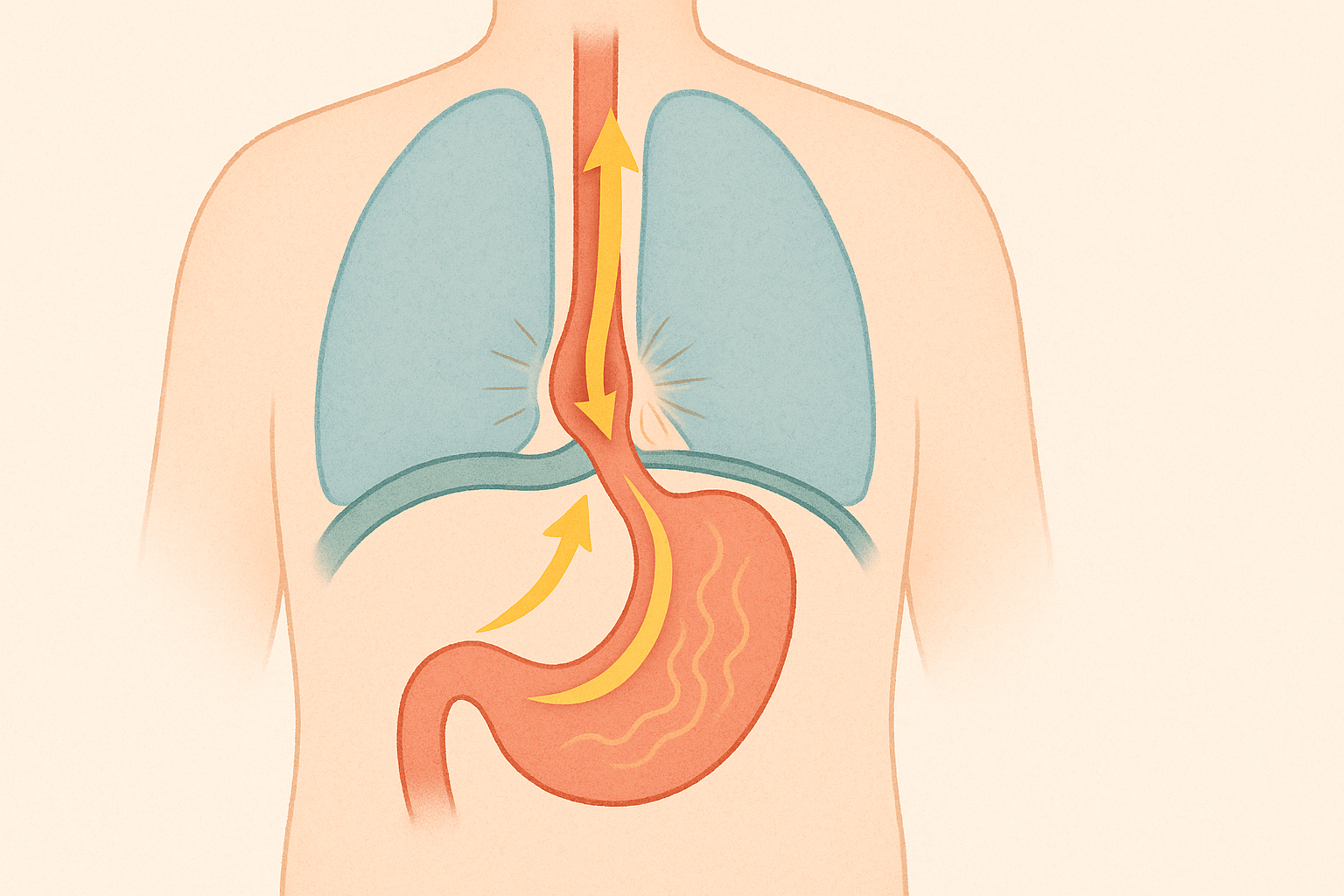
A hiatal hernia happens when rising gas and pressure in the upper stomach weaken the muscle-ring around the esophagus and push part of the stomach up through a tear in the diaphragm. That displaced stomach tissue pushes acid directly into the esophagus, causing heartburn. Mild hernias can often be managed on your own; moderate to severe hernias are surgical. Proper diagnosis uses an upper GI series (barium swallow) and/or an upper endoscopy.
Heartburn itself can build the pressure that causes a hiatal hernia — and a hiatal hernia then causes more heartburn. Here's how it all ties together.
In our H. pylori article, we talked about the effects of gas/pressure building up in the stomach when your stomach acids are decreased.
H pylori can cause this. Stress can cause this. Food allergies/sensitivities can cause this. Nicotine can cause this. Caffeine can cause this.
The result of course is belching, gas, pressure and heartburn. Now let's talk about the anatomy of the stomach and its relationship to the diaphragm and how this all ties together.
How a Hiatal Hernia Develops
The diaphragm is a thin, flat, horizontal muscle that sits right above your stomach and just below your lungs. When you breathe in, the diaphragm pulls downward towards the stomach, allowing the lungs to expand and draw in more air. The exhalation causes the diaphragm to push upwards off the stomach, towards the lungs, as the air leaves the lungs.
To allow for food to make its way down the esophagus and into the stomach, there is a cut-out, a "hole" if you will, in the diaphragm. That is where the esophagus slides through, connecting with the top of the stomach just below the diaphragm.
Now imagine that your heartburn is causing air and gas to build in the upper stomach, putting pressure on and expanding upwards into the bottom of the diaphragm.
That pressure, if not solved, can finally cause a weakening of the muscle-ring (esophageal sphincter) around the esophagus and the pressure in the upper stomach causes a tear in the diaphragm. Now the upper stomach can push up through that tear, causing a hernia.
This is called a hiatal hernia.
What Causes a Hiatal Hernia?
Some other things that can cause a hiatal hernia:
- Physical trauma (punched in stomach, car accident)
- Obesity (big tummy pushing upwards)
- Heavy lifting
- Vomiting
- Old age (all the muscles tend to weaken)
- Constipation (forceful bowel movements)
Chronic stress plays into the same pressure picture — it affects gut motility, acid production, and the tone of the lower esophageal sphincter. When stress is a major driver for a patient, we look at the cortisol rhythms behind it with adrenal stress testing.
Why This Is Bad: Barrett's Esophagus
Now it becomes clear, when a section of the stomach has torn through the diaphragm, that means that there's a section of the stomach that produces acids right into the esophagus.
This is bad.
The esophagus should never deal with acids pushing up into it, which is what heartburn is, also known as acid reflux. When this becomes a chronic problem, then the esophagus develops significant scar tissue called Barrett's esophagus. That is a pre-cancerous issue and if not treated, becomes a cancerous condition.
So obviously heartburn can develop, causing a hiatal hernia. Or vice versa - a hiatal hernia can be caused by several different things, leading to heartburn.
Do I Have a Hiatal Hernia? The Testing
So then the next question is: Do I have a hiatal hernia?
To properly diagnose this, the best tests are an upper GI series (barium swallow) and an upper endoscopy (EGD), which allow doctors to visualize the stomach's position and the esophagus. A barium swallow is considered ideal for defining the hernia's size, while endoscopy checks for complications like inflammation. You can read more on our hiatal hernia condition page.
So If I Have One, How Do I Fix a Hiatal Hernia?
First, let's talk about what traditional medicine says. If it is a mild or slight hernia, most GI Docs won't do anything. But they will say that you need to stay on PPI medications for the rest of your life. Period, end of conversation.
We couldn't disagree more.
If you read about our other opinions on heartburn, EOE, and PPIs, you will see why. But as far as a hiatal hernia, you can absolutely manage a mild or slight hernia on your own.
Now don't get me wrong, once that muscle ring around the stomach tears, it's never actually going to repair itself. The only way you're fixing that is through surgery. But if a surgeon doesn't want to touch it because it's only a mild tear, you do ALL of the following:
- lose weight (if needed)
- decrease food portion sizes
- eat several smaller meals throughout the day (as opposed to a 2-3 large meals)
- elevate the head of your bed by 8 inches
- avoid meals 2 to 3 hours before bedtime or before lying down
- avoid or limiting "trigger" foods and drink such as fried foods, fatty foods, acidic foods (citrus, tomato, vinegar), spicy foods, caffeine (coffee, chocolate), alcoholic beverages, carbonated drinks
- quit smoking
- avoid tight clothing that can increase the pressure on your abdomen, such as a tight belt, control top hosiery, and body shapers
AND….
The Daily Hiatal Hernia Technique
On a daily basis, do our favorite Hiatal Hernia treatment:
- First thing after waking up in the morning, drink a full glass of room temperature water
- Then stand up, bring your arms straight out like you're a big "T", then bend both elbows so your hands are on your chest
- Stand up high on your toes and then drop down abruptly onto your heels. Creating a jolt to your spine. Repeat this 10 times.
- Immediately after this, raise your arms straight up in the air and take in 15 short, quick breaths through your mouth only.
This technique lowers the stomach off of the diaphragm, creating some space around the upper stomach and reducing that hernia. You can actually do this technique at any point during the day (it does not just have to be first thing in the morning after waking), especially if you have done something which you think has irritated your hernia.
It works by pulling the stomach away from that tear so you don't develop consistent acid reflux or Barrett's esophagus. And it does work.
Ready for real answers?
Your first step is a free 15-minute discovery call.
Book Free Discovery CallNo cost. No commitment. Just answers.Mild vs Moderate-to-Severe: What To Expect
| Hernia size | What conventional care usually says | What you can do |
|---|---|---|
| Mild / slight tear | Most GI Docs won't do anything — except tell you to stay on PPIs for life | Manage it yourself: the lifestyle list above plus the daily repositioning technique |
| Moderate to severe | The GI doctor will recommend surgery — and you should do it | It's really only the slight hernias which you can manage on your own; beyond that it's a surgical issue |
When Surgery Is the Answer
Now if you are diagnosed with a moderate to severe hiatal hernia, the GI doctor will recommend surgery, and you should do it. It's really only the slight hernias which you can manage on your own. Once they're more severe than that, it really does become a surgical issue only.
So we literally have just given you the game plan on how to figure out if you have a hiatal hernia, and if you do and it's non-surgical, how to manage a hiatal hernia. If you have done all of these things and you are still struggling with heartburn, you need to contact us — and let's look at what else might be causing it.
What is a hiatal hernia?
A hiatal hernia is when pressure in the upper stomach weakens the muscle-ring around the esophagus and tears the diaphragm, allowing part of the stomach to push up through that tear. That displaced stomach tissue produces acid right into the esophagus — which is why a hiatal hernia and heartburn feed each other.
What are the symptoms of a hiatal hernia?
The result of the gas and pressure is belching, gas, pressure, and heartburn — and with the hernia itself, acid produced directly into the esophagus. Over time that chronic acid exposure can develop into Barrett's esophagus, a pre-cancerous scarring of the esophageal lining, which is why the pressure pattern is worth addressing early.
Can a hiatal hernia heal on its own?
The tear itself won't repair — once that muscle ring around the stomach tears, only surgery fixes it. But a mild hernia can absolutely be managed: smaller meals, elevated bed head, no meals 2-3 hours before lying down, trigger avoidance, and a daily repositioning technique that pulls the stomach away from the tear.
How is a hiatal hernia diagnosed?
The best tests are an upper GI series (barium swallow) and an upper endoscopy (EGD). The barium swallow is considered ideal for defining the hernia's size, while the endoscopy checks for complications like inflammation. Together they show the stomach's position relative to the diaphragm.
Ready for real answers?
Your first step is a free 15-minute discovery call.
Book Free Discovery CallNo cost. No commitment. Just answers.